AgentCon Silicon Valley is a free, one-day, in-person conference for developers building with AI agents.
One of the peaks of living in the bay is that every week there will be a tech conference that is worth going to. Last week, I attended AgentCon Silicon at the Computer History Museum, Mountain View California, which btw, is a fantastic venue. Because there was so much great content to digest, I’m breaking my report into two parts to stay within a reasonable “context window” for an article.
The Conferecne
AgentCon 2026 happened on May 4th (yes lots of Star War reference) is a small to mid size conference with two to three concurrent tracks happening at the same time. The key sponsors were:
The conference was great – Majority (if not all) of the speakers were engineers and developers. Content were all very applicable to my daily work. The full schedule can be found at the event’s page.
All together I went to a total of 9 talks. I am very glad that there were always seats available and attendances were pretty evenly distributed between concurrent talks.
These are the talks I attended:
Part 1 (this entry, morning session)
- Will The Real Autonomous Agent Please Stand Up – Patrick Chanezon, Dona Sarkar
- Your agent needs a sandbox, not a desert – Samuel Colvin
- How to Build Auditable Agents Using Context Graphs – Nyah Macklin
Part 2 (afternoon session)
- Agents Don’t Know What They Don’t Know – Rob Zuber
- Lessons from a No-Code Library – Drew Breunig
- Securing Coding Agents: Sandboxes, Guardrails, and Real-World Attacks – Dan Ndombe
- From One-Shot to Agentic: Optimizing Shop Intelligence with DSPy – Kshetrajna Raghavan
- GitHub Agentic Workflows – Peli de Halleux
- Client side Web AI Agents for the agentic internet of the future – Jason Mayes
Will The Real Autonomous Agent Please Stand Up – Patrick Chanezon, Dona Sarkar
The session was covered by two excellent speakers – and I would have loved to hear them speak longer
To open AgentCon, Dona Sarkar shared two key concepts that framed the rest of the day. She spoke about the evolution of becoming an ‘Agent Boss’ and, at the same time, reminded us to check if we’re building real AI innovation or simply
settling for ‘faster horses.’ Building faster horses are fine – if that free us up to work on transformative AI. These two thoughts really resonated throughout the sessions.
If I had asked people what they wanted, they would have said faster horses,” – Not Henry Ford.
Dona also explored the various form factors AI will manifest in. Her talk was funny, entertaining, and highly informative.
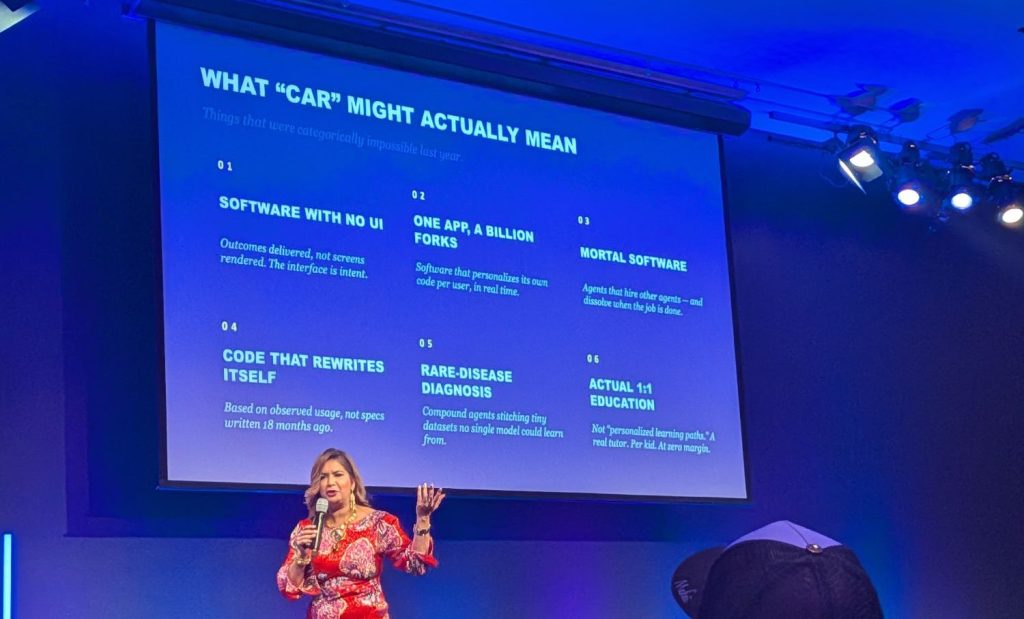
Patrick Chanezon
Unfortunately, due to a work matter, I missed the first half of his talk. However, in the portion I caught, he spoke about the shifting roles of ICs and Managers in the agentic evolution. Doubling down on the theme of “Agent Bosses,” he explained that an IC’s success now depends on how effectively they can oversee their agents. He also referenced a key ACM article suggesting that as AI automates entry-level tasks, the industry must adopt a “preceptor” model to ensure junior developers still gain the critical judgment needed to become the next generation of senior engineers. To be successful in this new landscape, you will need the following skills:
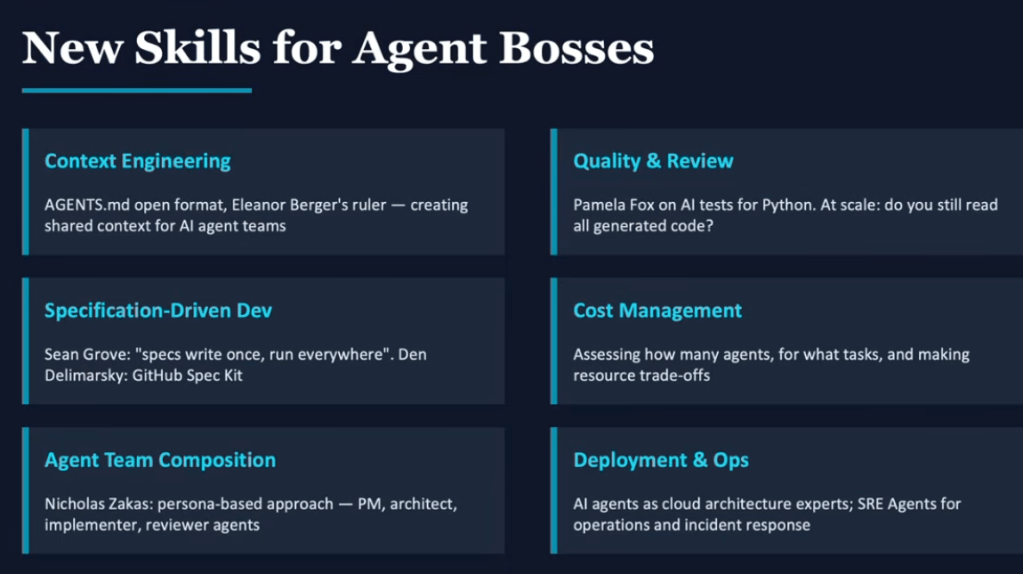
(taken from https://www.youtube.com/watch?v=0HI3OIi-YJY)
Your agent needs a sandbox, not a desert – Samuel Colvin
Samuel Colvin (the creator of Pydantic) introduced Monty, a Rust-based Python interpreter designed for safe agentic use. Unlike CPython, it operates on a “deny-all” security model, starting with zero capabilities. Because it is an interpreter, it boasts microsecond startup times. It’s an ideal tool for basic Python tasks, text manipulation, and math within a secure environment.
How to Build Auditable Agents Using Context Graphs – Nyah Macklin
Nyah discussed leveraging Neo4j to build context and memory graphs. This was one of my favorite talks because it was immediately applicable to my current projects. I am so happy to see Neo4j releasing these tools as completely open-source rather than “fauxpen” source.
If you are serious about becoming an “Agent Boss,” a scalable, distributed context and memory system is a must. Research (such as the CommGPT paper) and practical application consistently show that you can achieve significantly better performance by providing a robust Knowledge Graph and RAG system rather than relying solely on fine-tuning.
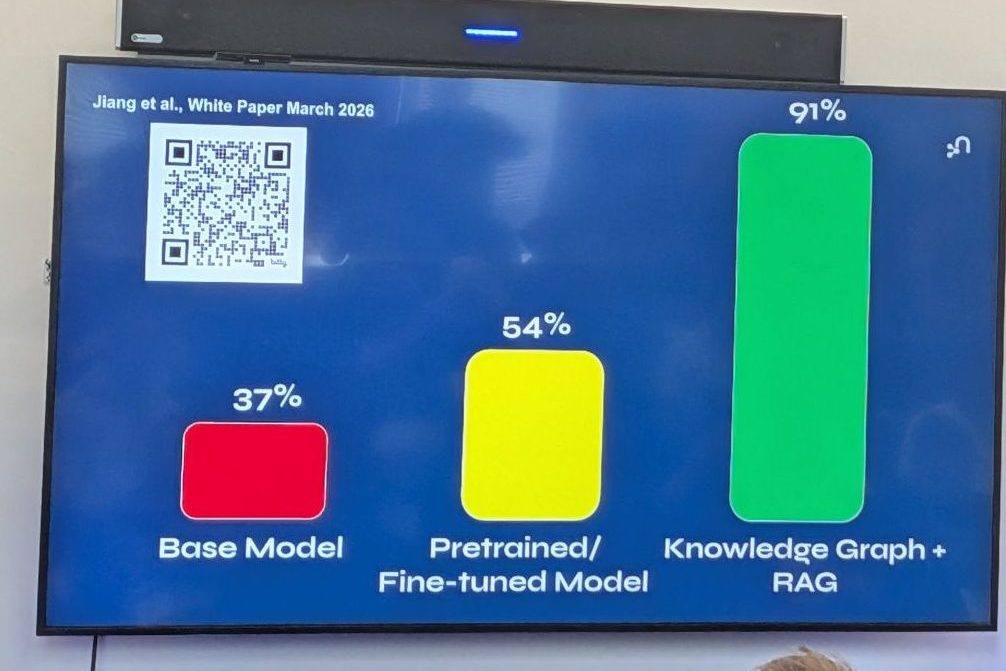
Key Takeaway: The primary advantage of GraphRAG over traditional vector-based RAG is its inherent ability to map and understand complex, interconnected relationships within data. In her talks she introduced and mentioned that while neo4j-labs/agent-memory use semantic search for core retrieval, they leverage Knowledge Graph structures for organization, deduplication, and context assembly.
Closing Thoughts on Part 1
The morning sessions at AgentCon made one thing clear: we are moving past the “AI as a chatbot” phase and into the “AI as a workforce” era. Becoming an Agent Boss isn’t just a catchy phrase; it’s a fundamental shift in how we think about code, memory, and security. Whether it was the security of Rust-based sandboxes or the structural power of Knowledge Graphs, the bar for “real innovation” is being set higher every day.
I’m still processing the implications for the future of the engineering profession, but the transition toward an Agentic SDLC is clearly well underway.
Coming Next in Part 2
In the next entry, I’ll dive into the remaining six talks from the afternoon tracks, focusing on the practical “how-to” of securing and optimizing agents.
Here’s what I’ll be covering:
- Agents Don’t Know What They Don’t Know: Handling uncertainty with Rob Zuber.
- Lessons from a No-Code Library: Drew Breunig on simplifying complexity.
- Securing Coding Agents: A deep dive into guardrails and real-world attacks.
- Optimizing Shop Intelligence: Using DSPy to move beyond one-shot prompts.
- GitHub Agentic Workflows: How the industry giants are orchestrating agents.
- Client-side Web AI Agents: The future of the agentic internet.
Stay tuned—Part 2 will be live shortly!


Leave a Reply